Plumber of 31 Years Says the Blue Gel Under Your Rim Works for About 10 Seconds — Here's the Hands-Free 20-Minute Habit He Uses in His Own Home Instead
Ray Kowalski has pulled more toilets than he can count across Ohio's hard-water suburbs. The repair he sees most, he says, starts with a stain homeowners mistake for dirt — and a cleaning routine that never touches the place it's growing. This is the hands-free habit he now leaves behind on every job.
It was 9:40 on a Friday night when the text came in: "Water's coming UP. In-laws arrive tomorrow. Please."
Kowalski knew the house. Nice couple, spotless bathroom, and a brown ring in the bowl the wife had apologized for twice on his last visit.
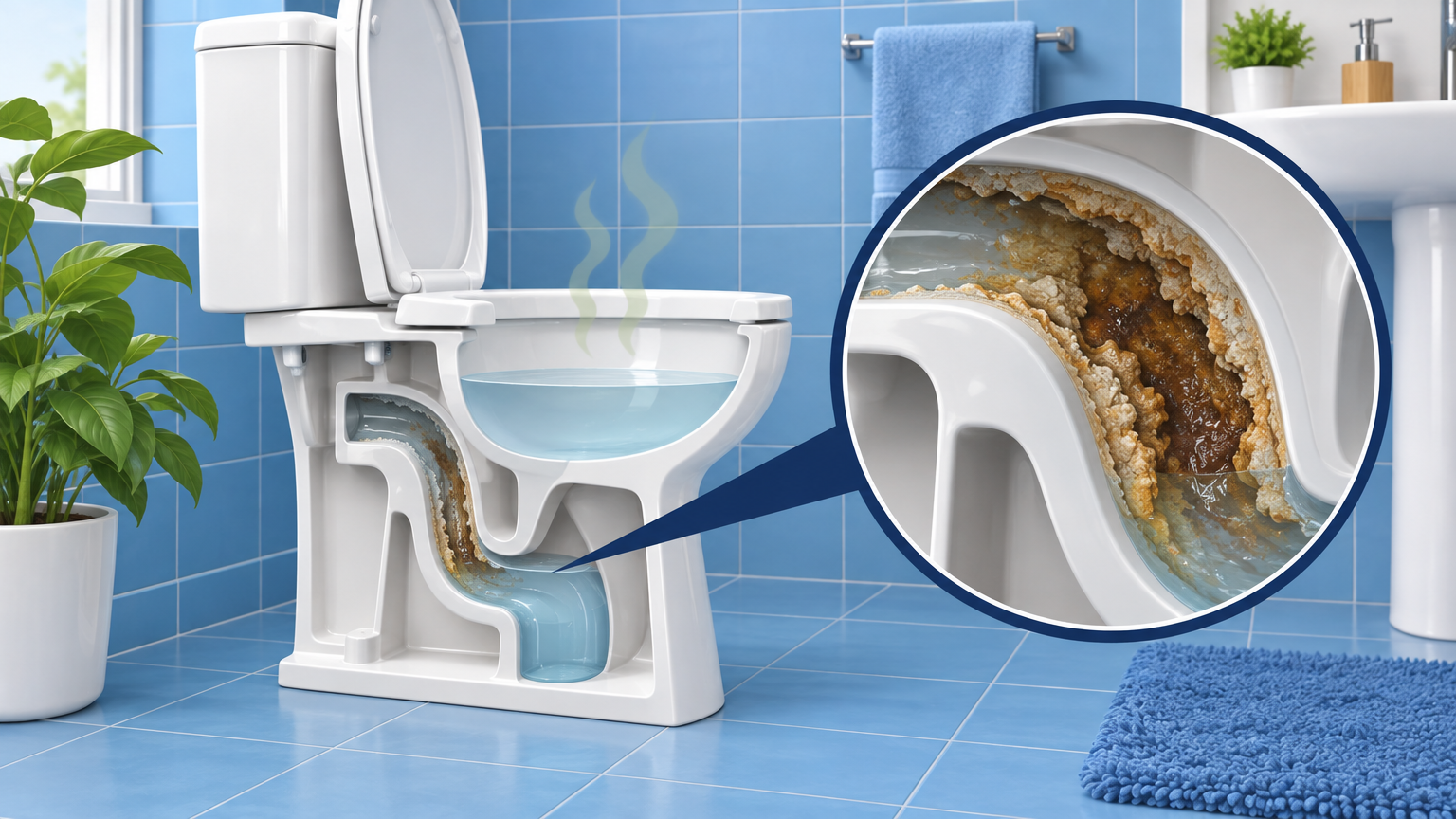
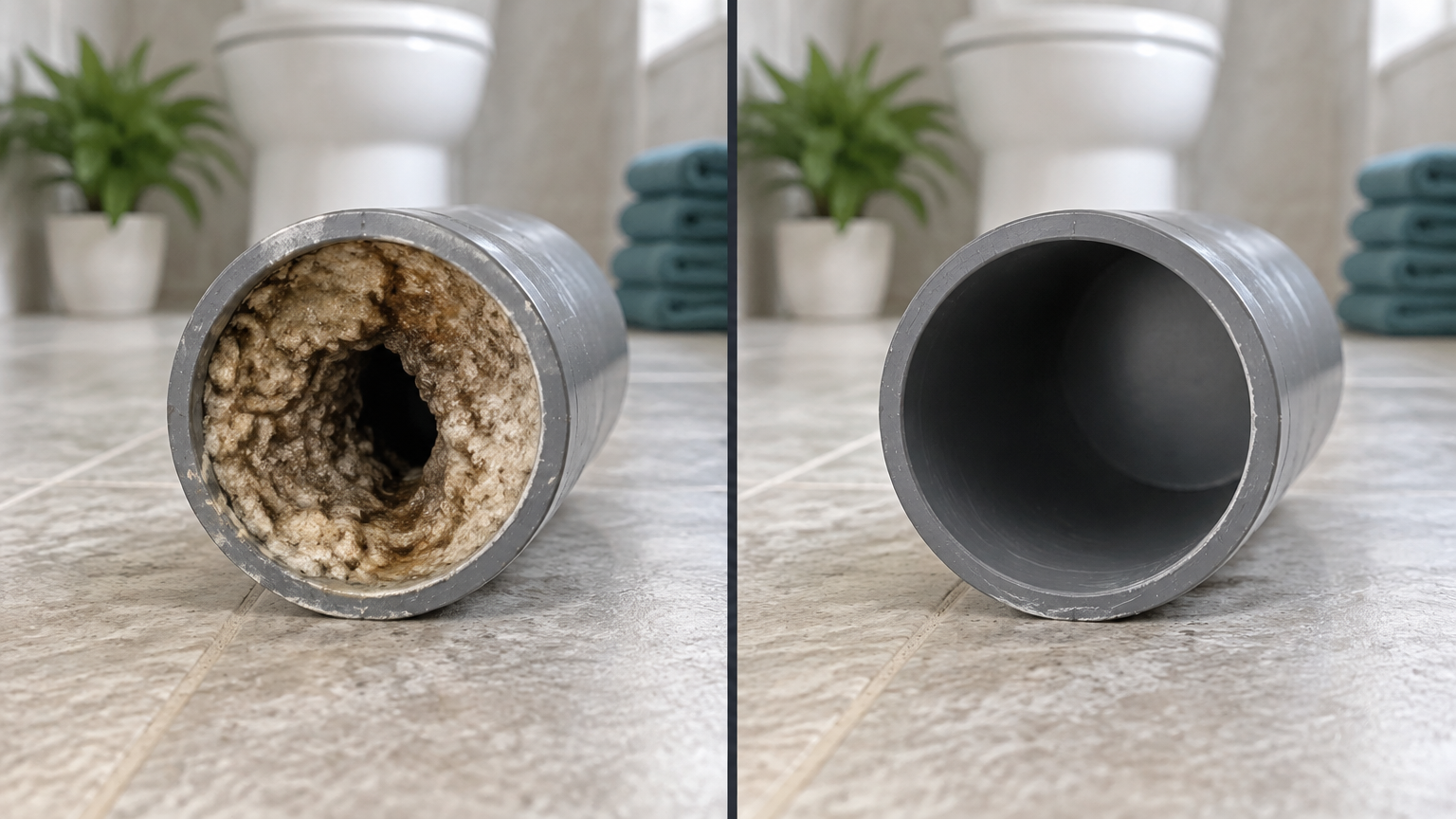
When he lifted the toilet off the floor, the ring turned out to be the least of it. The curved channel behind the bowl was lined with rock-hard mineral scale, rough as sandpaper, with grime packed into every pore.
"I bleach it every single week," she said from the doorway.
"Bleach changes the colour," he told her, flicking a flake loose with his thumbnail. "It doesn't touch THIS."
The bill that night came to more than most families spend on cleaning supplies in three years.
That Ring Isn't Dirt — and It Doesn't Stop at the Waterline
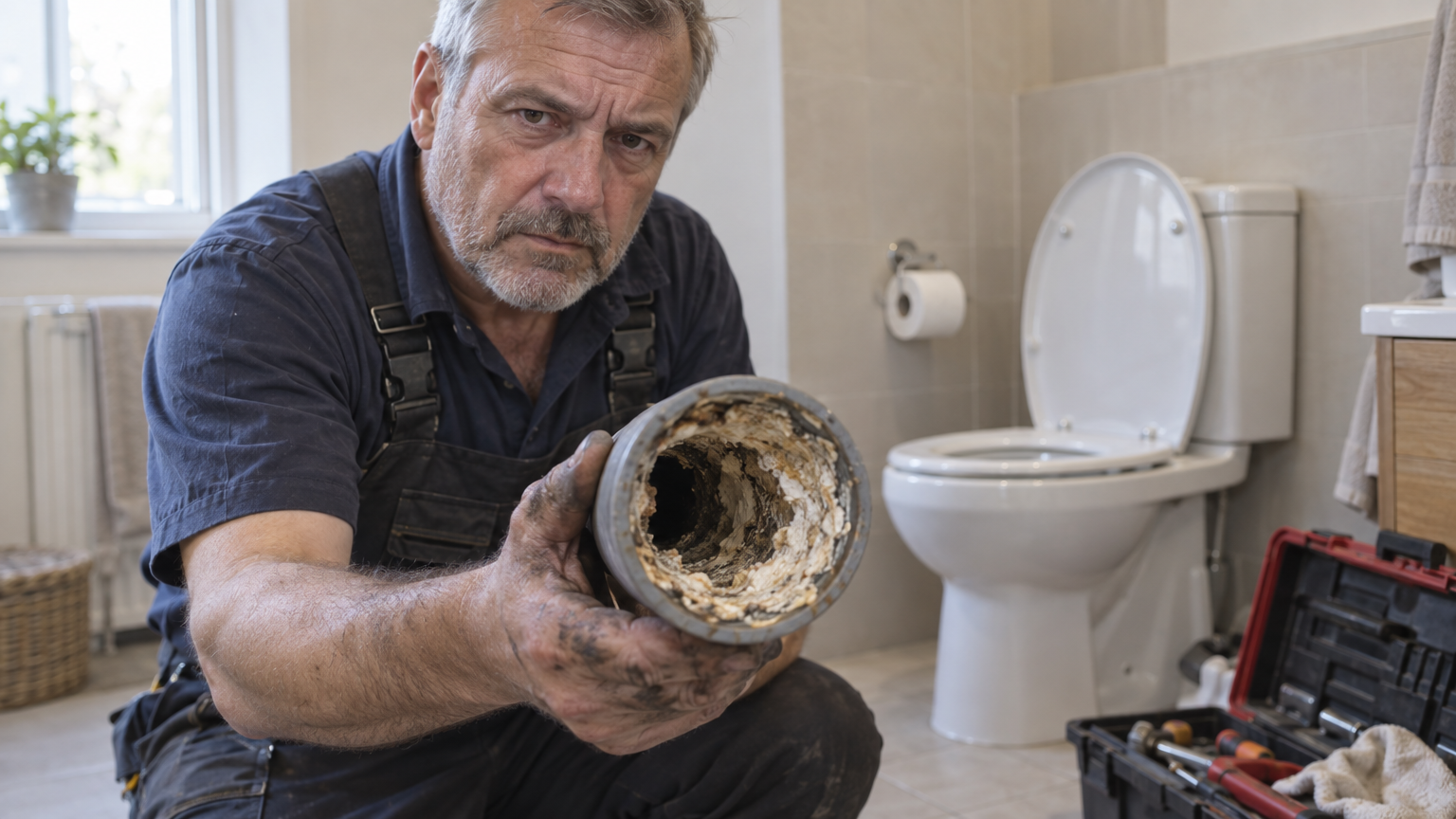
Here's what almost nobody gets told: the ring in your toilet isn't grime sitting on the porcelain. It's mineral scale — calcium, magnesium, sometimes iron — bonded to the surface.
Every time the bowl refills, hard water leaves a microscopic layer behind. Layer on layer, it hardens into the same crust you'd find inside a neglected kettle.
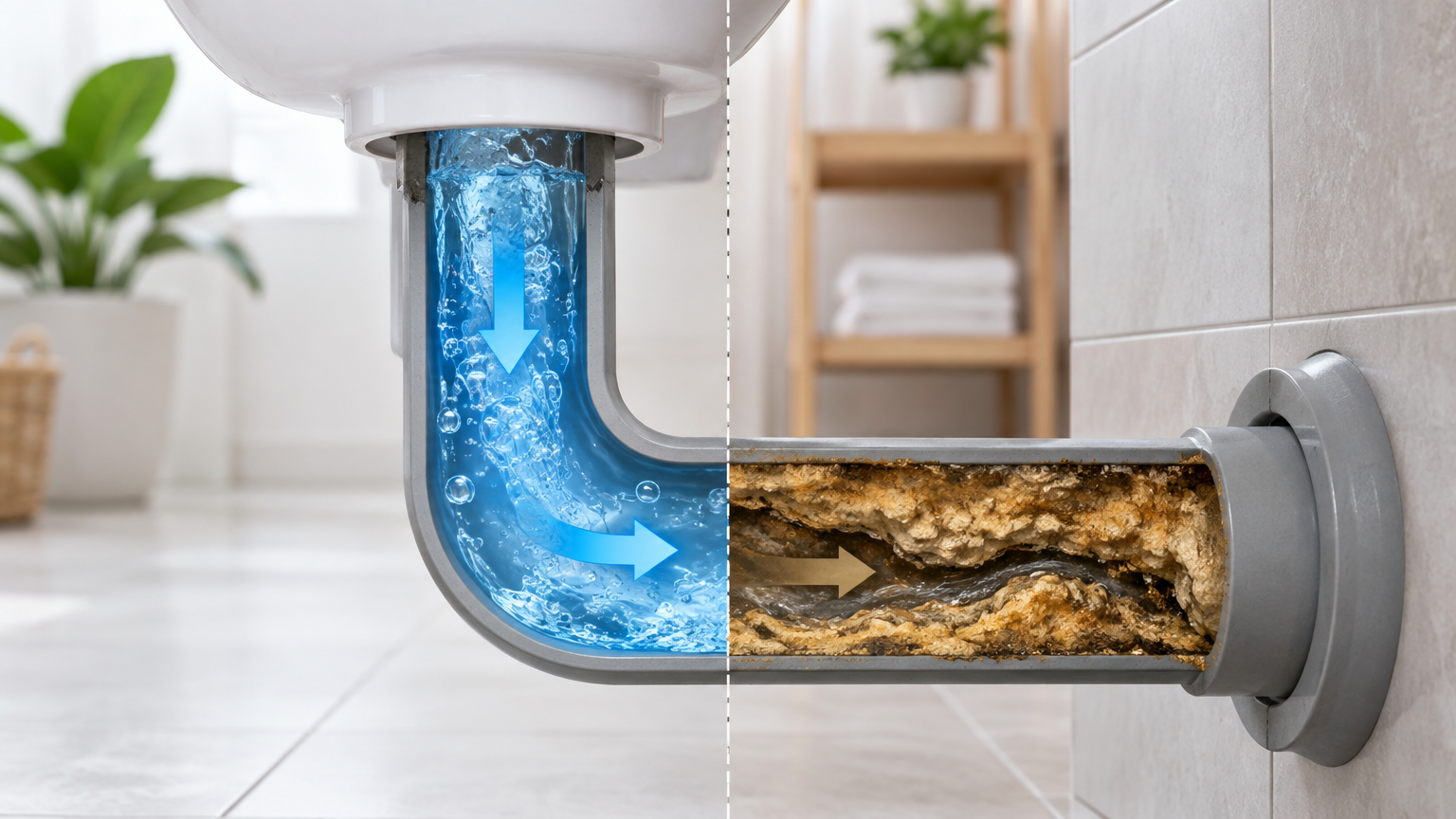
And the bowl is just the part you can see. Behind it, the porcelain curves into the trapway, a channel that holds water around the clock and scales up just as fast. Another crop forms in the little rim jets that feed your flush.
"People think they've got a cleaning problem," Kowalski says. "They've got a chemistry problem. You can't scrub a bond loose. You have to dissolve it."
Once scale roughens a surface, everything else grabs on — soap film, paper fibers, everyday grime. The ring at the waterline is only the visible tip of it.
"Half my customers have spotless bathrooms, and I still chip crust out of their toilets. Clean and scale-free are two completely different things."
— Ray Kowalski, licensed master plumber
Weak Flush, Gurgles, a Ring That Keeps Coming Back: Your Toilet Is Trying to Tell You Something
Kowalski hears the same complaints described the same way, week after week. Customers assume they're unrelated.
They're usually four chapters of one story.
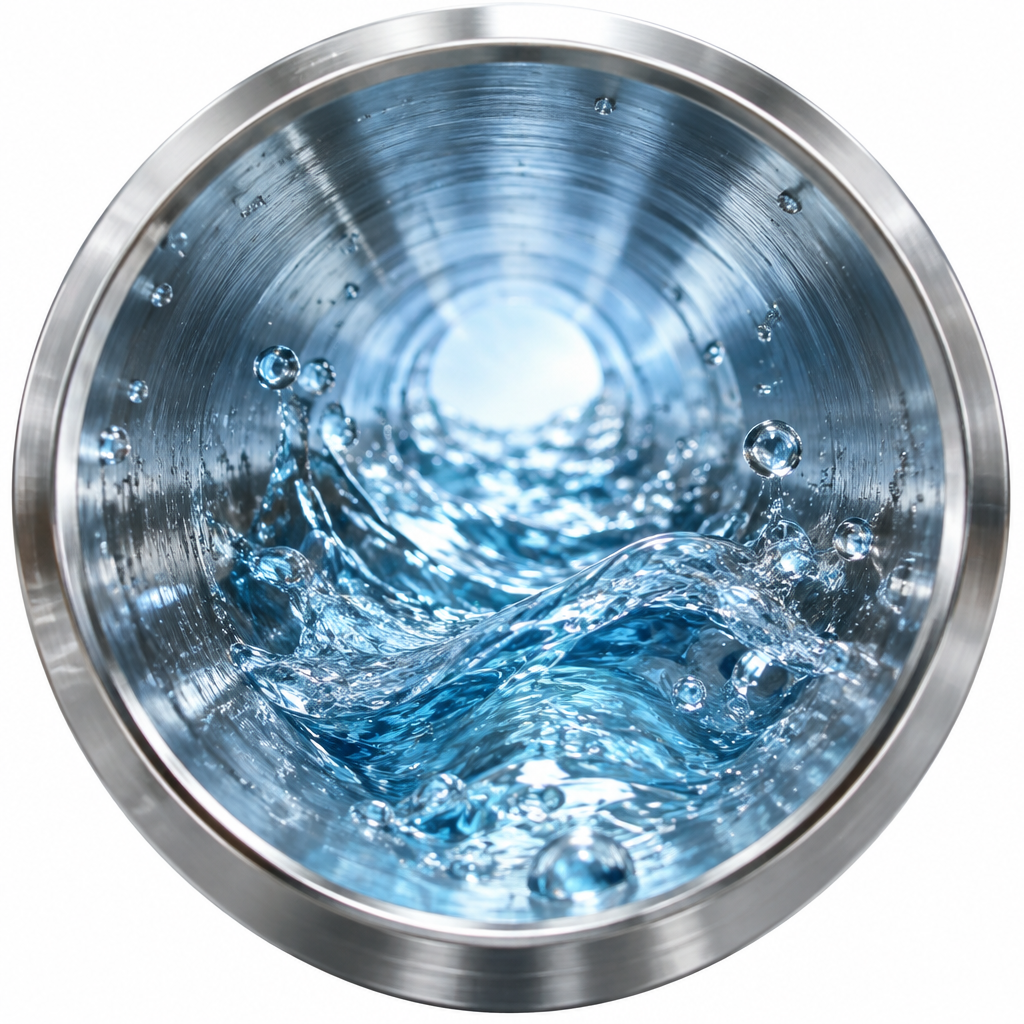
How scale takes over a toilet
Four signs, one cause — in the order most people notice them
Each stage can last for months. The fix gets harder with every one.
-
A faint shadow
A pale line forms where the water sits. One scrub seems to fix it. It's back by Friday.
-
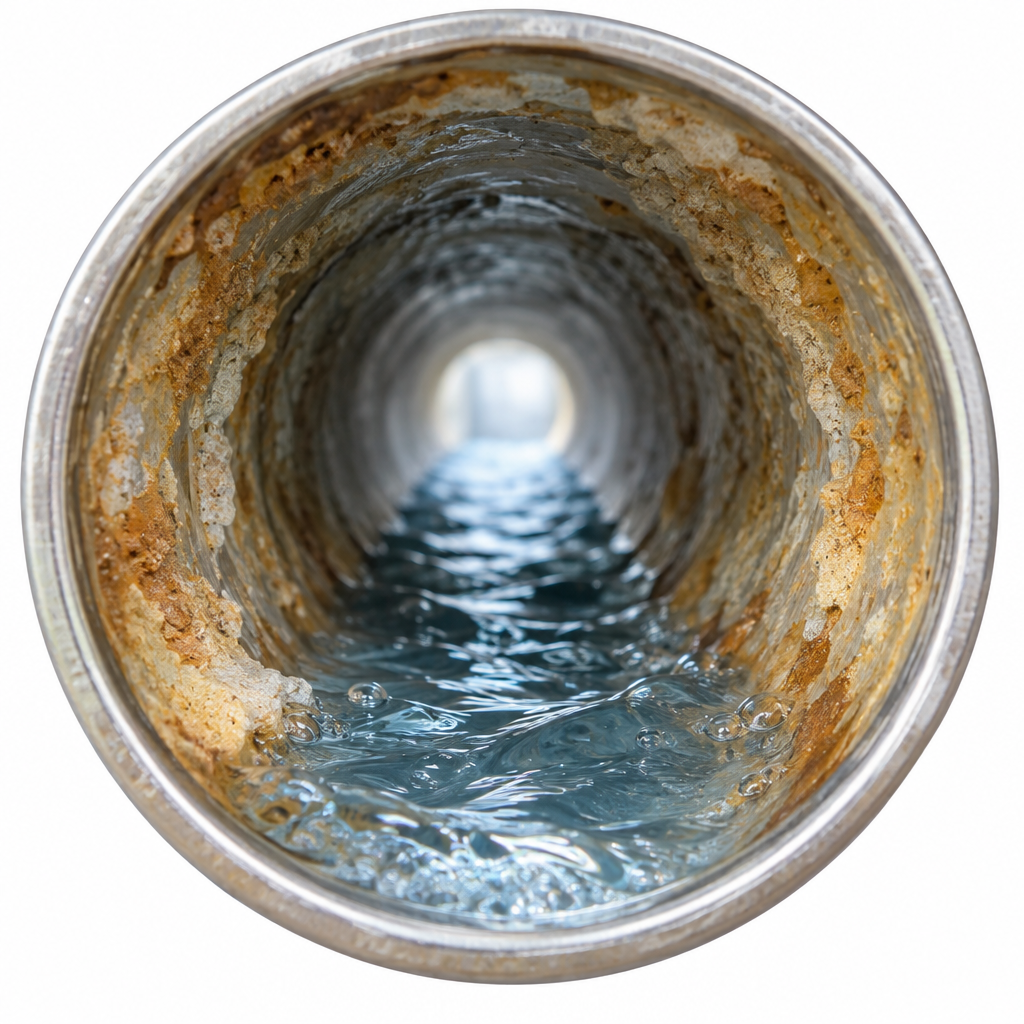
The ring that won't budge
Scale has bonded to the porcelain. Brushing polishes it, bleach lightens it, and neither removes it.
-
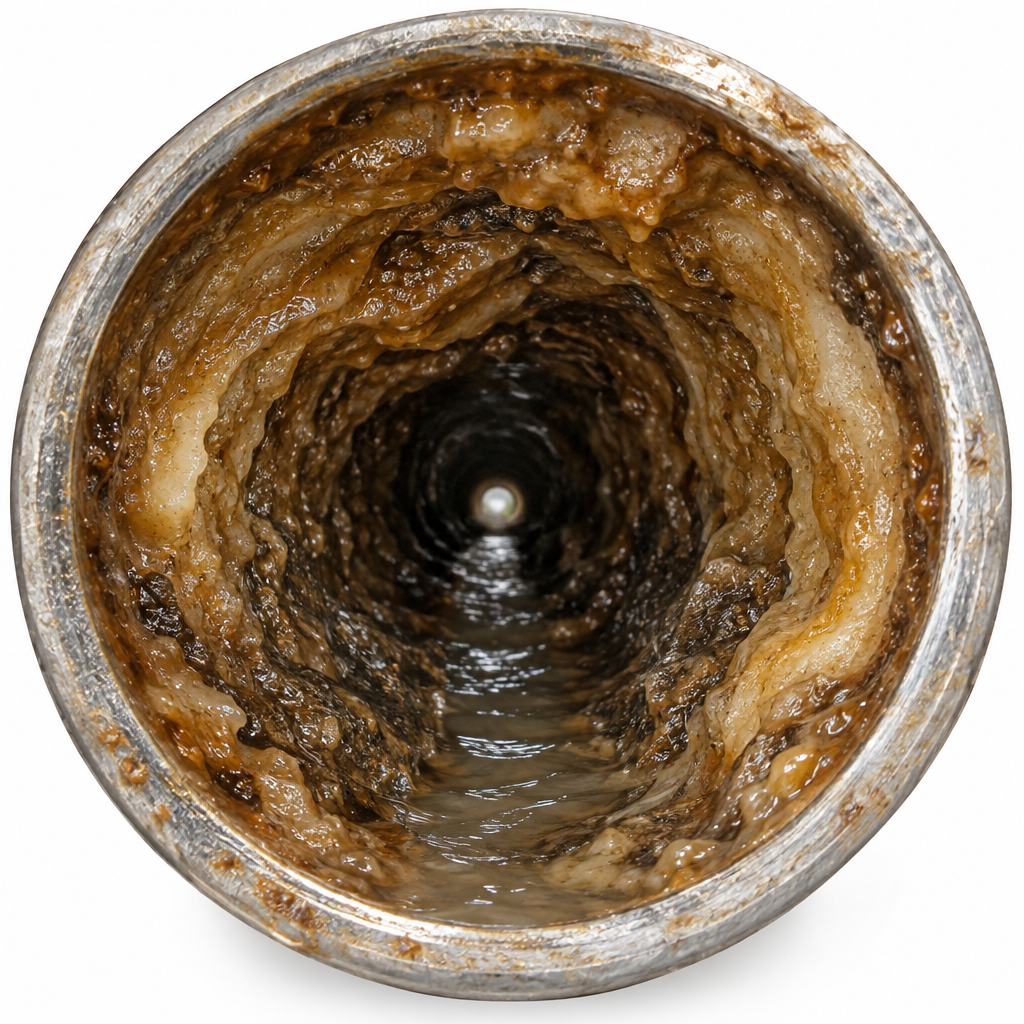
The lazy flush
Scale narrows the rim jets and the trapway. You start holding the handle down, or flushing twice.
-
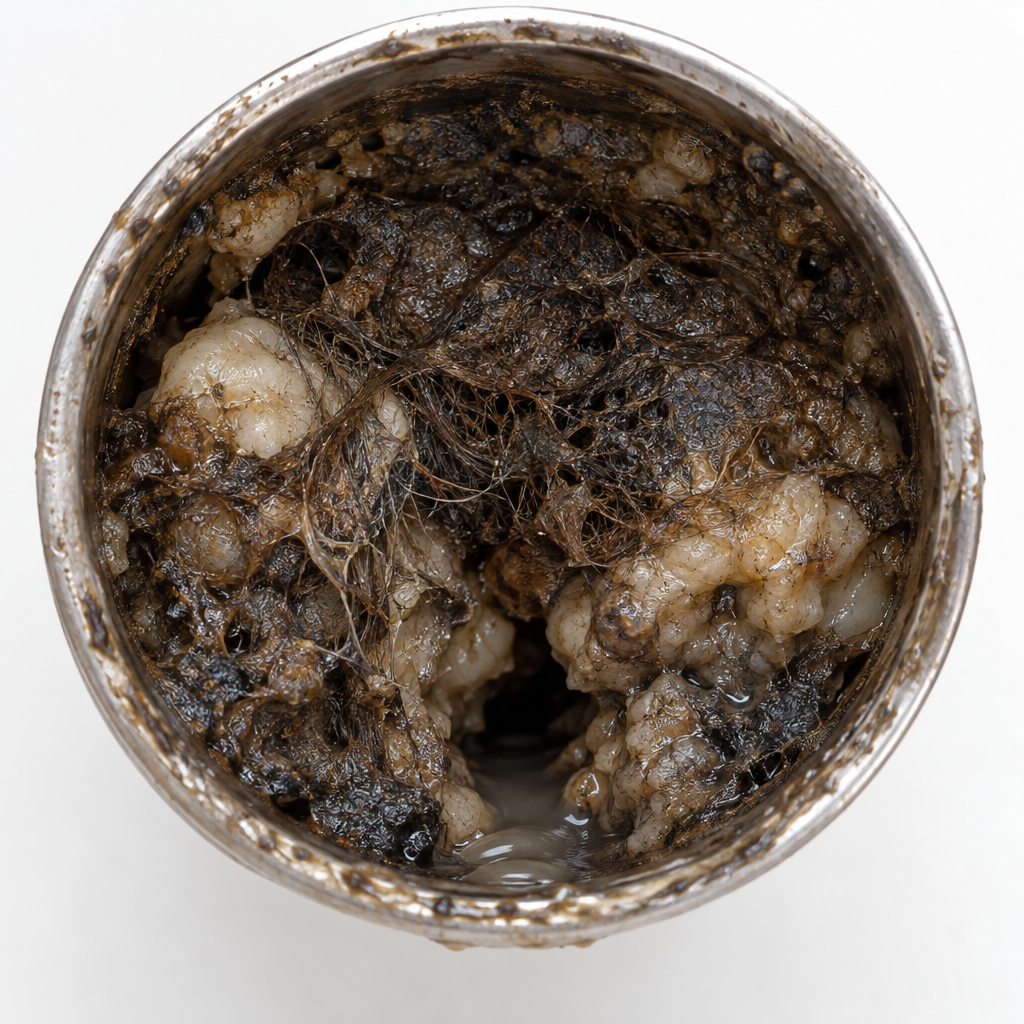
The Friday-night text
A rough, narrowed channel catches what a smooth one would pass. That's when someone calls a plumber.
Kowalski's take: stage one costs you almost nothing to deal with. Stage four costs you a weekend rate — and usually an audience.
Ditch the Gel: Why Everything in Your Cleaning Cabinet Keeps Losing
Kowalski has a little test he runs with customers. He asks them to squeeze their gel under the rim and start counting out loud.
Most of it hits the water before they reach ten.
That, he says, is the whole problem with the toilet aisle: everything in it leaves before the job is finished.
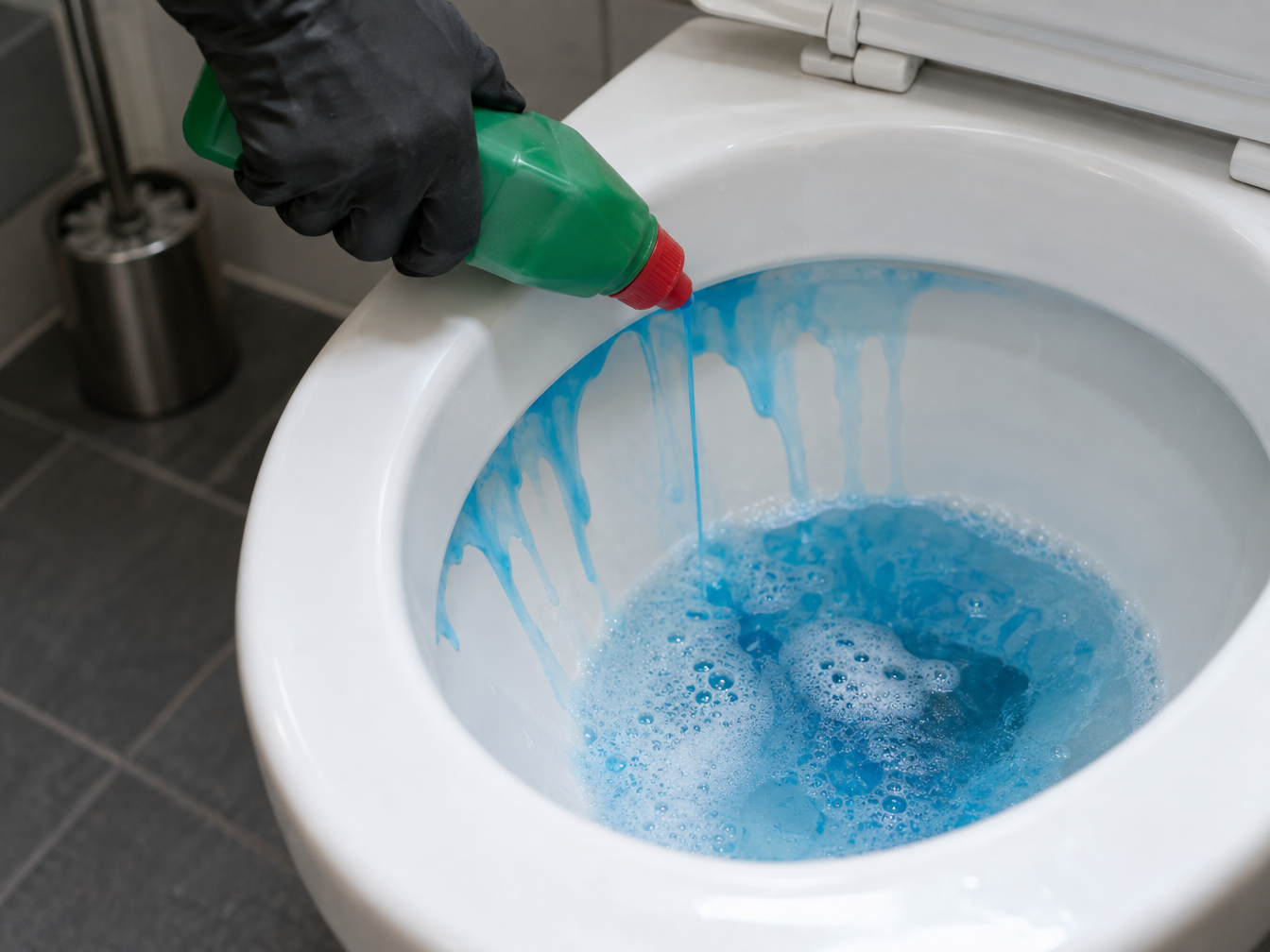
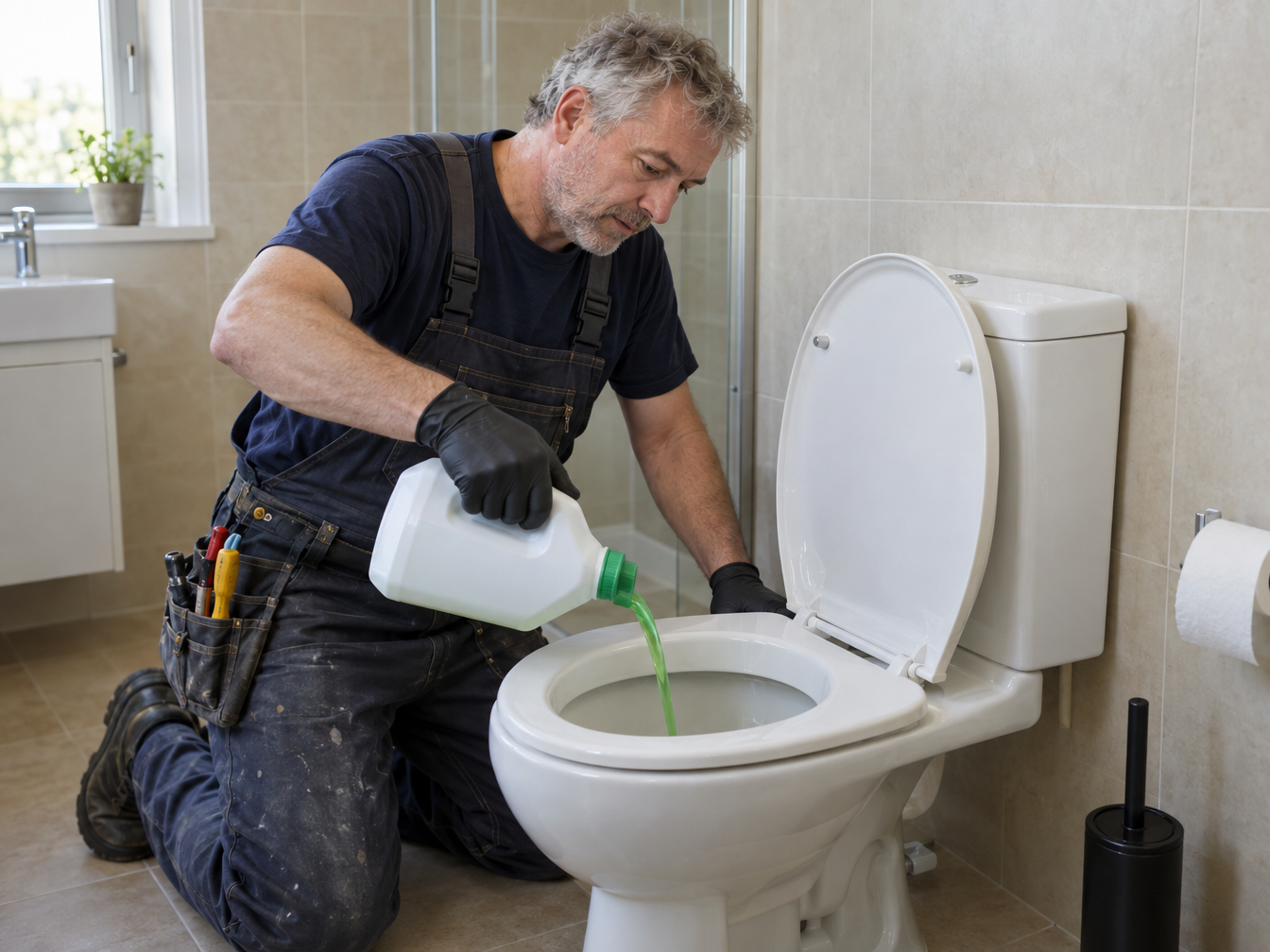
Gels and bleach tablets — about ten seconds of work. They slide down the wall, whiten whatever they pass, and leave the scale exactly where it was.
Vinegar and baking soda — a science-fair fizz. Diluted the instant it hits the bowl water, and it never climbs anywhere near the rim.
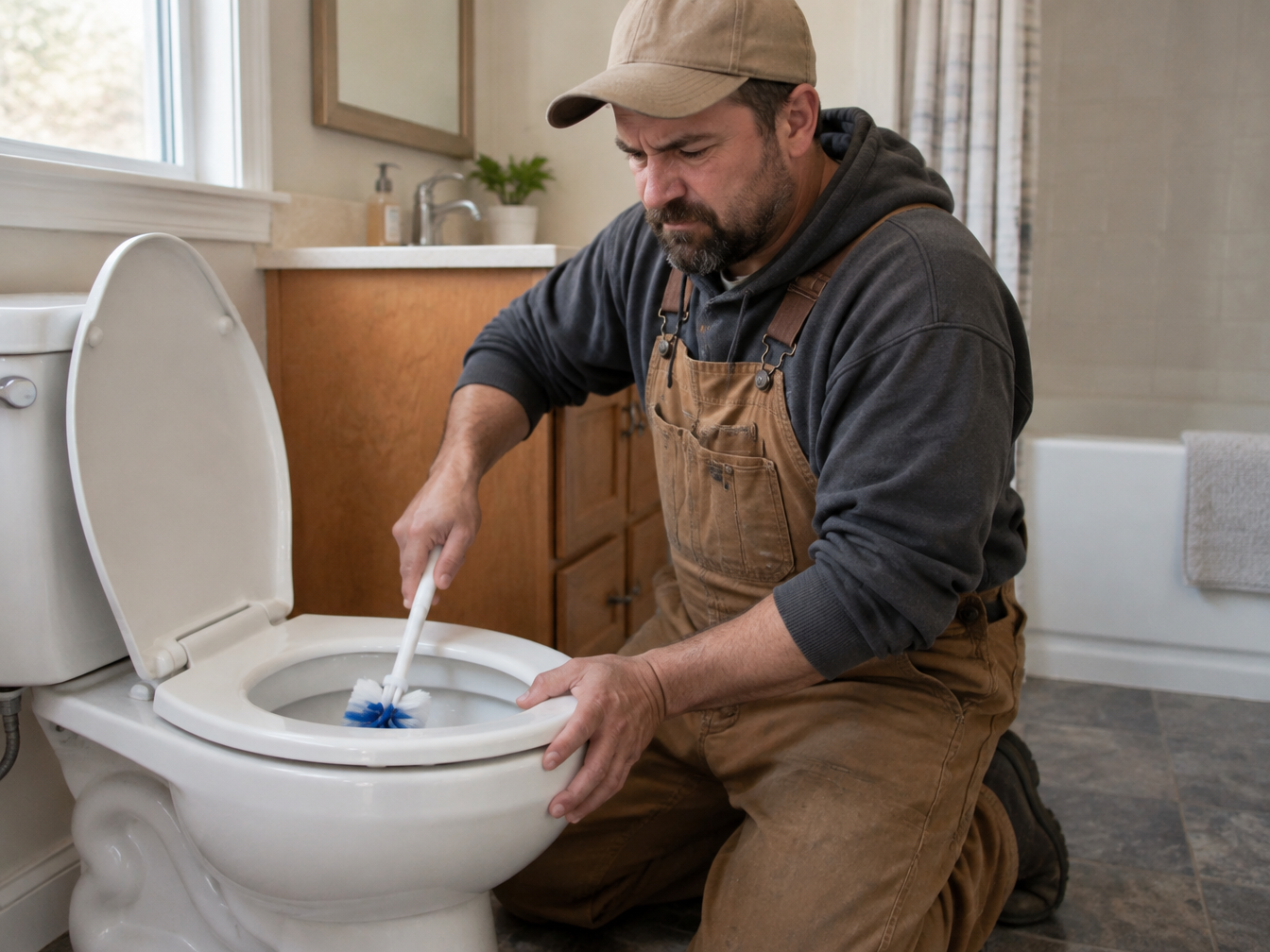
The brush — elbow grease against a chemical bond. It smooths the top of the ring and can't reach past the first curve.
Pumice stones — effective, and risky. Press a little too hard and you scratch the glaze, which gives the next ring a better grip.
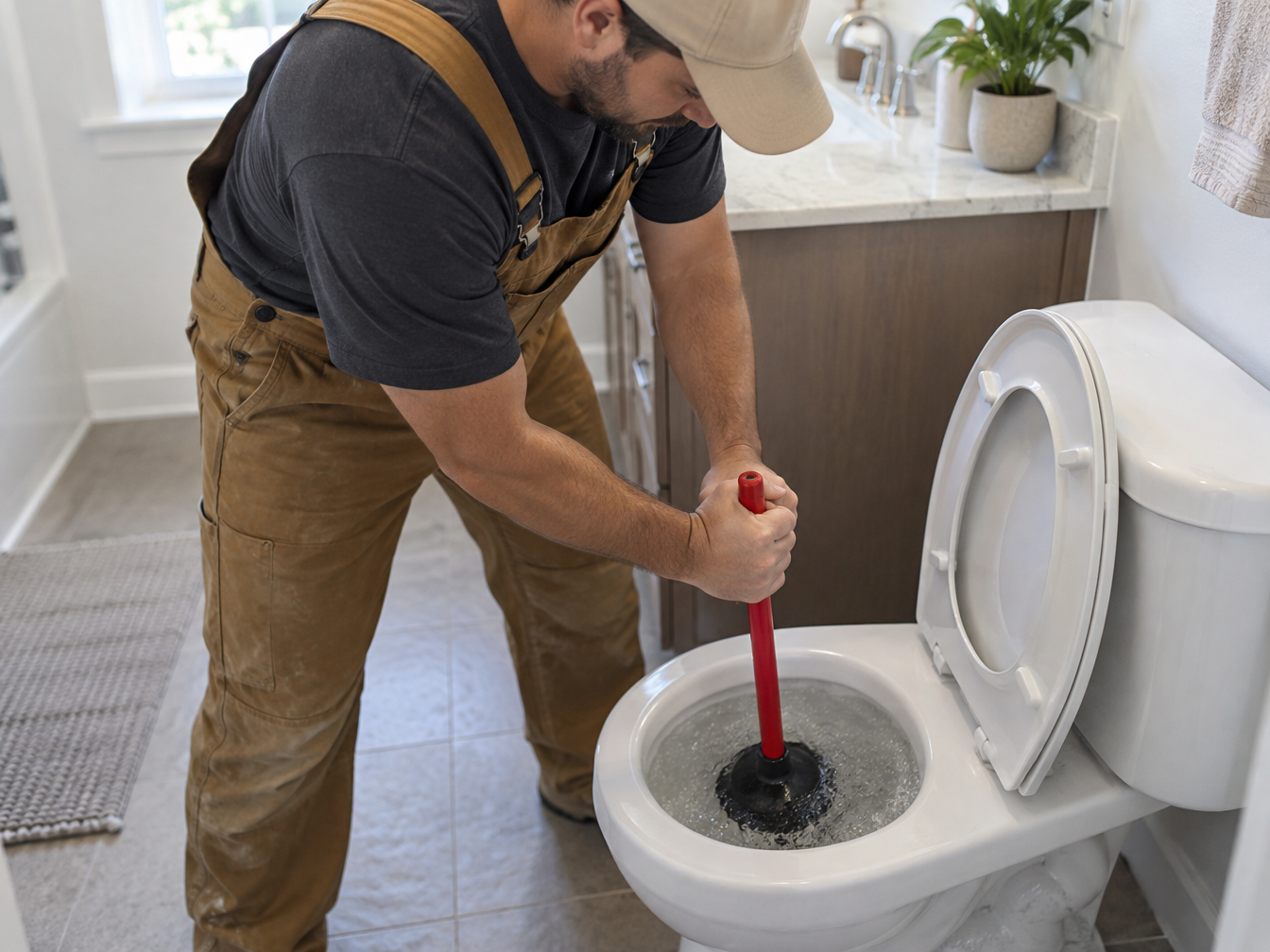
Caustic drain openers — a sledgehammer. They're made for clogs, not scale, and Kowalski won't pour them through older plumbing on a schedule.
Calling him — the expensive option. "I'm always happy to come out," he jokes. "I'd just rather you never had to call."
What a hard-water toilet actually needs, he says, is the opposite of everything above: something that climbs to the rim, stays put, and gives the acid time to dissolve the bond.
The Cleanest Toilet He'd Ever Seen in a Hard-Water Town
Kowalski didn't go looking for a new product. He stumbled onto one during a routine job.
Last spring, a retired schoolteacher called him about a dripping fill valve. Ten-minute fix. But when he lifted the tank lid and glanced into the bowl, he stopped.
Her house ran on the same water as half his callouts — water that leaves a white crust on every faucet in town. Yet her bowl had no ring. The rim jets were clear. The toilet flushed like it had just come out of the box.
"Okay, what do you use on this?" he asked.
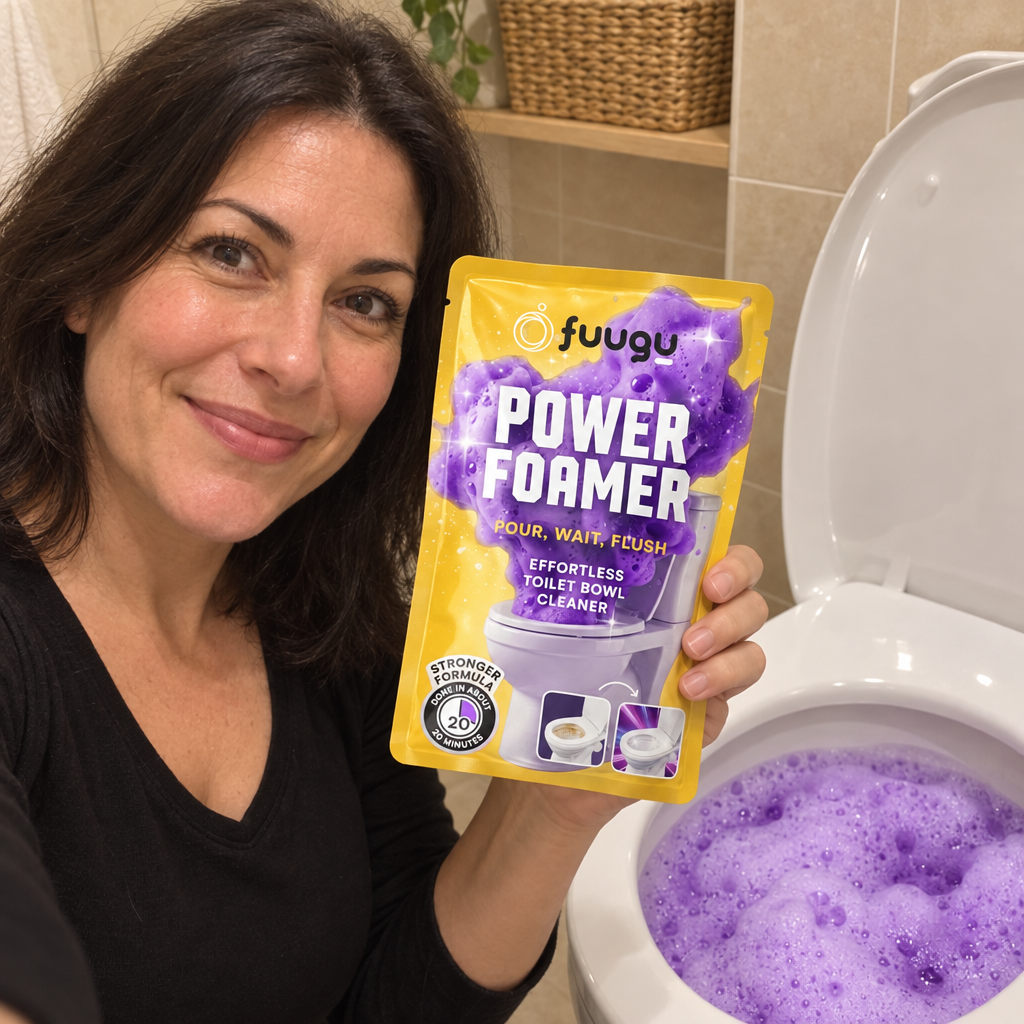
She opened the vanity and handed him a small yellow bag. "You pour it in on Sunday, go read the paper, and flush," she said. "I gave my toilet brush to the church rummage sale."
He was skeptical. He'd watched plenty of foaming cleaners fizz up and collapse in seconds. So he bought a box and tried it on the worst toilet he had access to: one of his own rental units, with a ring that had beaten everything he'd ever thrown at it.
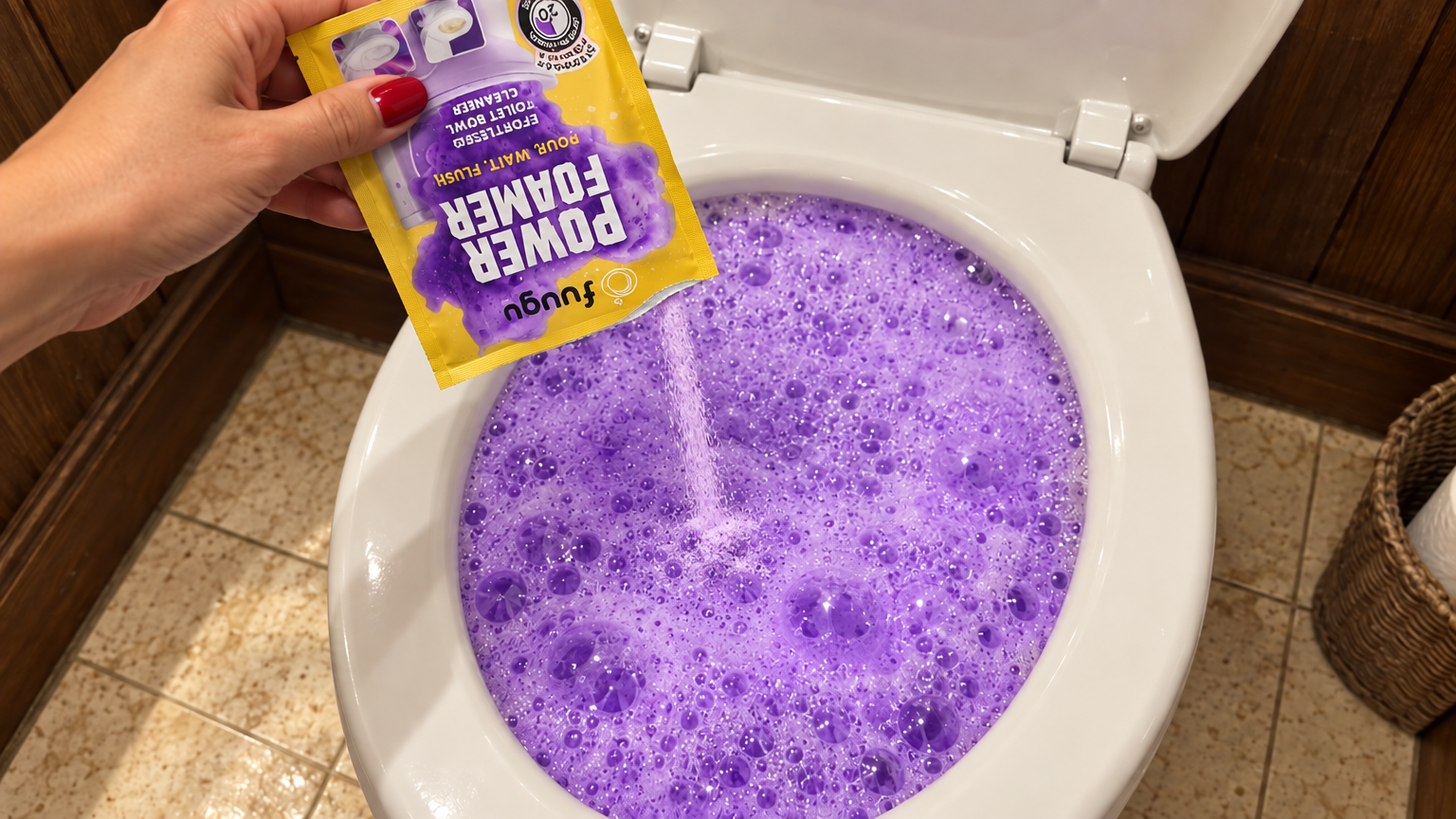
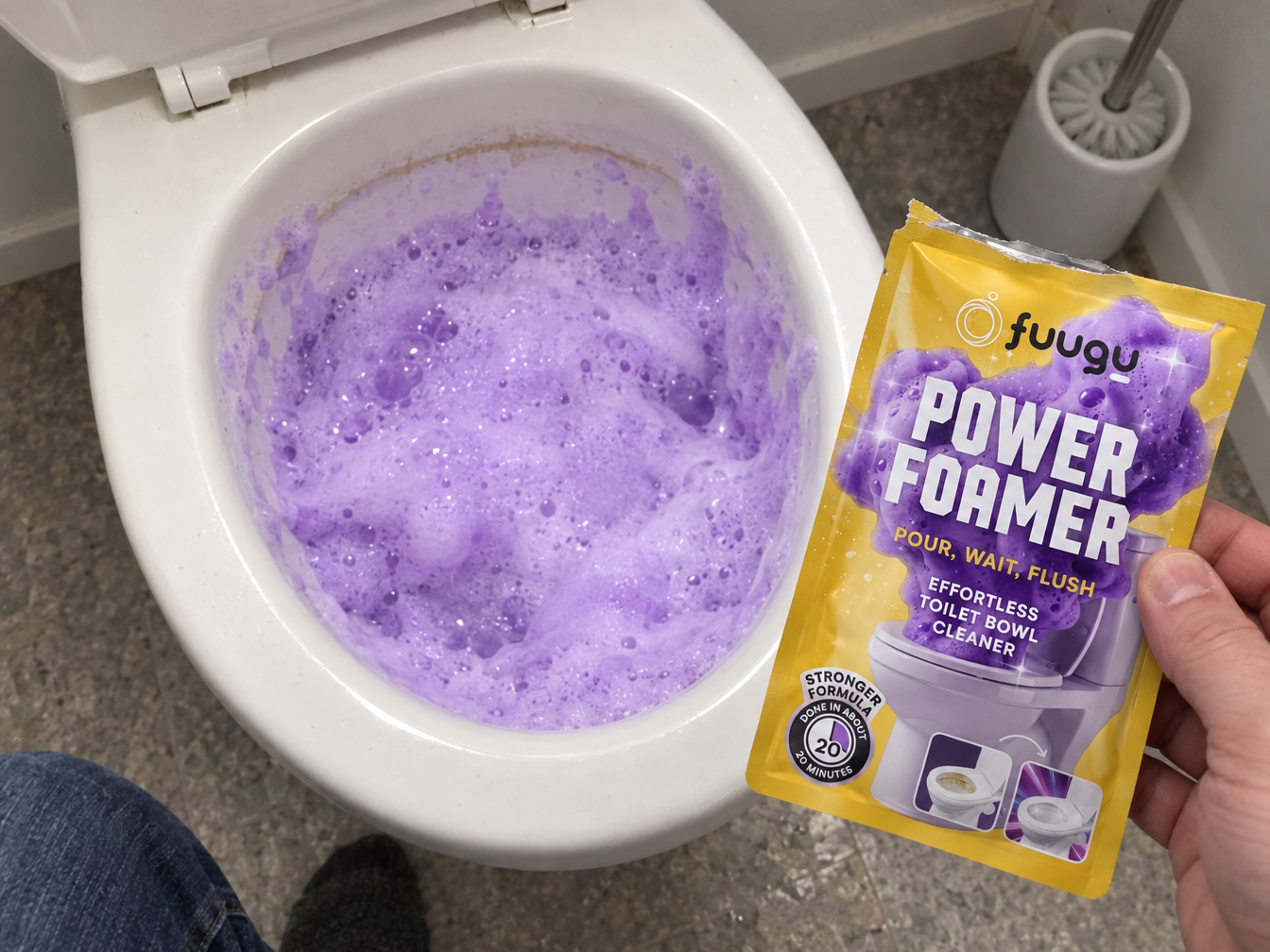
The foam climbed the walls, crept up under the rim — and was still sitting there when he walked back in twenty minutes later.
That yellow bag was Fuugu, and it's now the only cleaner he recommends by name.
Why 20 Minutes Beats 10 Seconds Every Time
Dissolving scale comes down to contact time. Leave a mineral-dissolving acid on a stain for a few seconds and you barely lighten it. Leave it there for twenty minutes and the bond starts to let go.
That's the thinking behind what the makers call the "Purple Hold." Fuugu's dense foam carries citric acid up the bowl and under the rim. A stabilizer keeps that foam from deflating, so the acid stays pressed against the scale for about 20 minutes.
Three things happen while you're off doing something else:
The ring is dissolved, not sanded. The acid works into the scale bonded to the porcelain instead of bleaching the top of it.
The rim jets get treated too. The foam climbs right up to the openings where scale chokes a flush.
The trapway gets a soak. Treated water sits in the first bend behind the bowl for the full 20 minutes — a pipe-length deeper than any gel ever reaches.
Then a chelating ingredient latches onto the loosened minerals and carries them out with the flush, so they don't settle back down. No chlorine bleach, no ammonia, no eye-watering fumes.
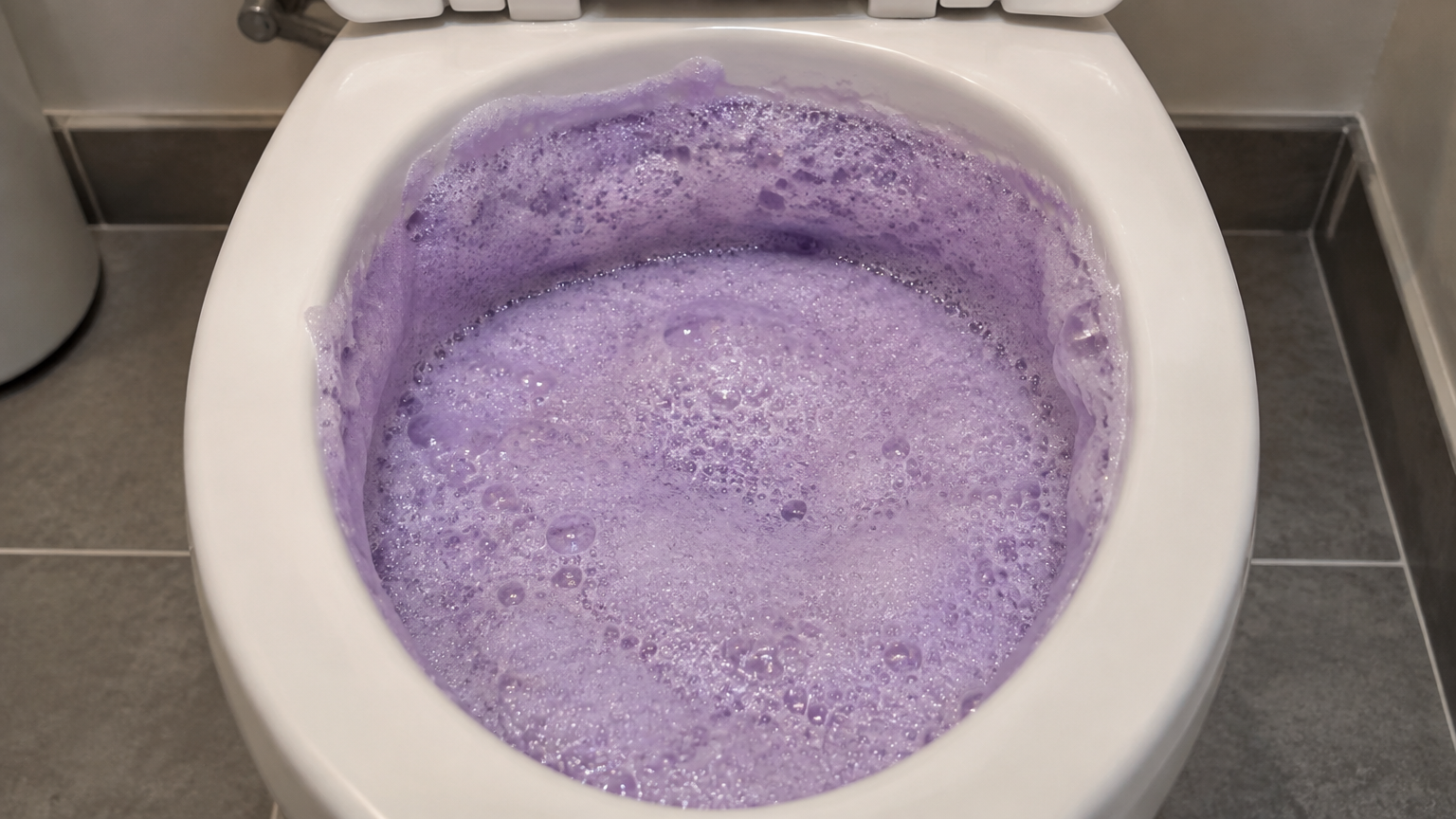
The whole routine takes less time than reading this paragraph:
1. Pour one bag in.
The powder reacts with the bowl water, and purple foam starts rising within seconds.
2. Leave it alone for about 20 minutes.
The purple shows you exactly where it's holding. No kneeling, no gloves, no brush.
3. Flush.
The dissolved scale goes down with the foam. A ring that's had years to build may need a second bag the following week.
"Every product in that aisle is in a hurry. Scale isn't. This is the first cleaner I've used that's willing to wait it out."
— Ray Kowalski, licensed master plumber
The Smell That Creeps Back an Hour After You Clean
Kowalski's second-favorite thing about Fuugu is one customers usually mention before he can.
Rough scale traps grime, and grime traps odour. So a bathroom you scrubbed at noon smells faintly stale again by dinner — and most products respond by spraying perfume over it.
"Pine forest on top, same problem underneath," he says.
Fuugu contains an ingredient that absorbs odour molecules instead of covering them up. Add that to clearing away the scale that holds grime in the first place, and you get a bathroom that smells like… nothing at all.
For anyone who hosts, that's the real payoff: you can send a guest down the hall without sprinting ahead to check the bowl.
Readers Who Tried It on Their Worst Toilet
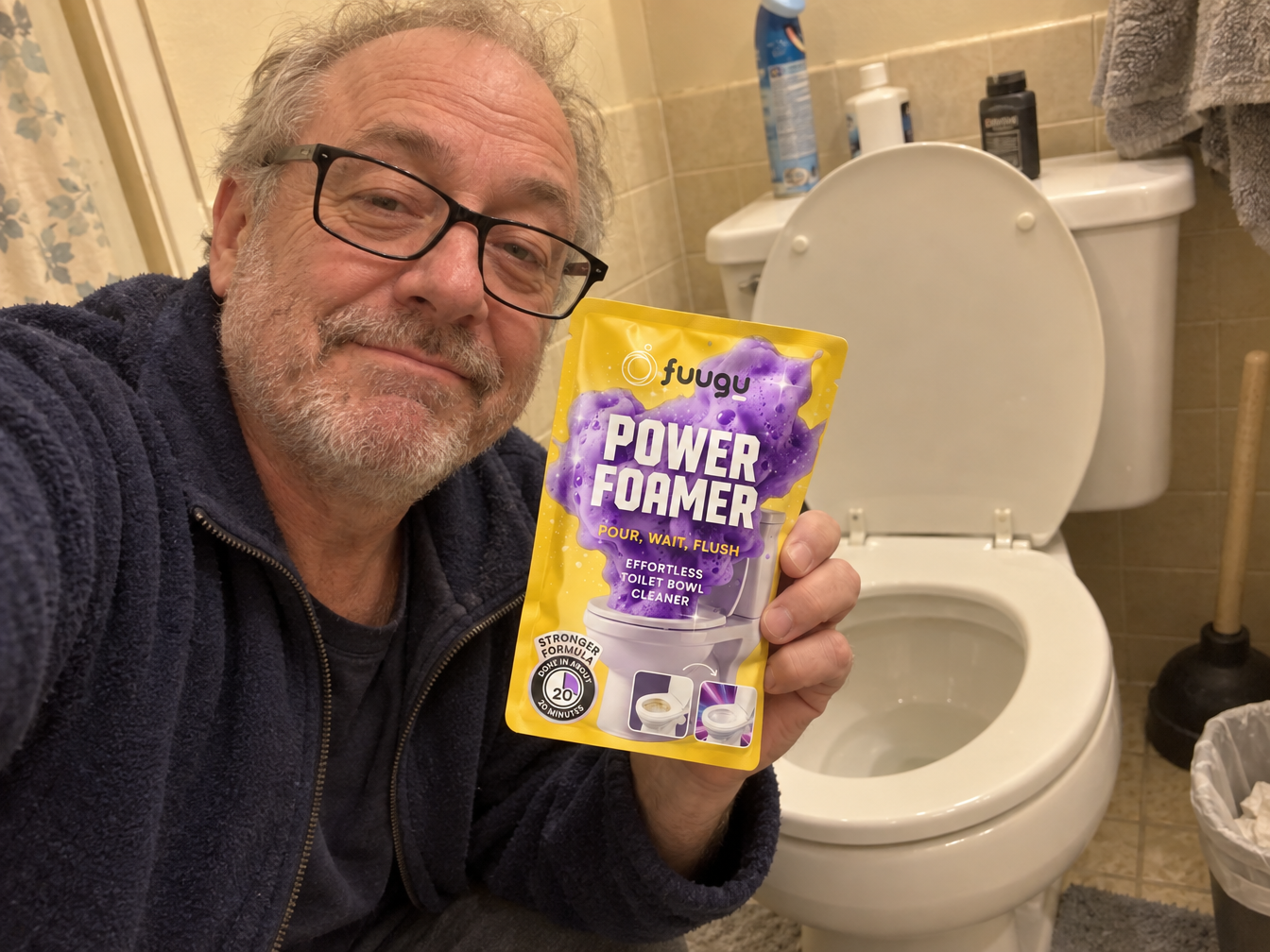
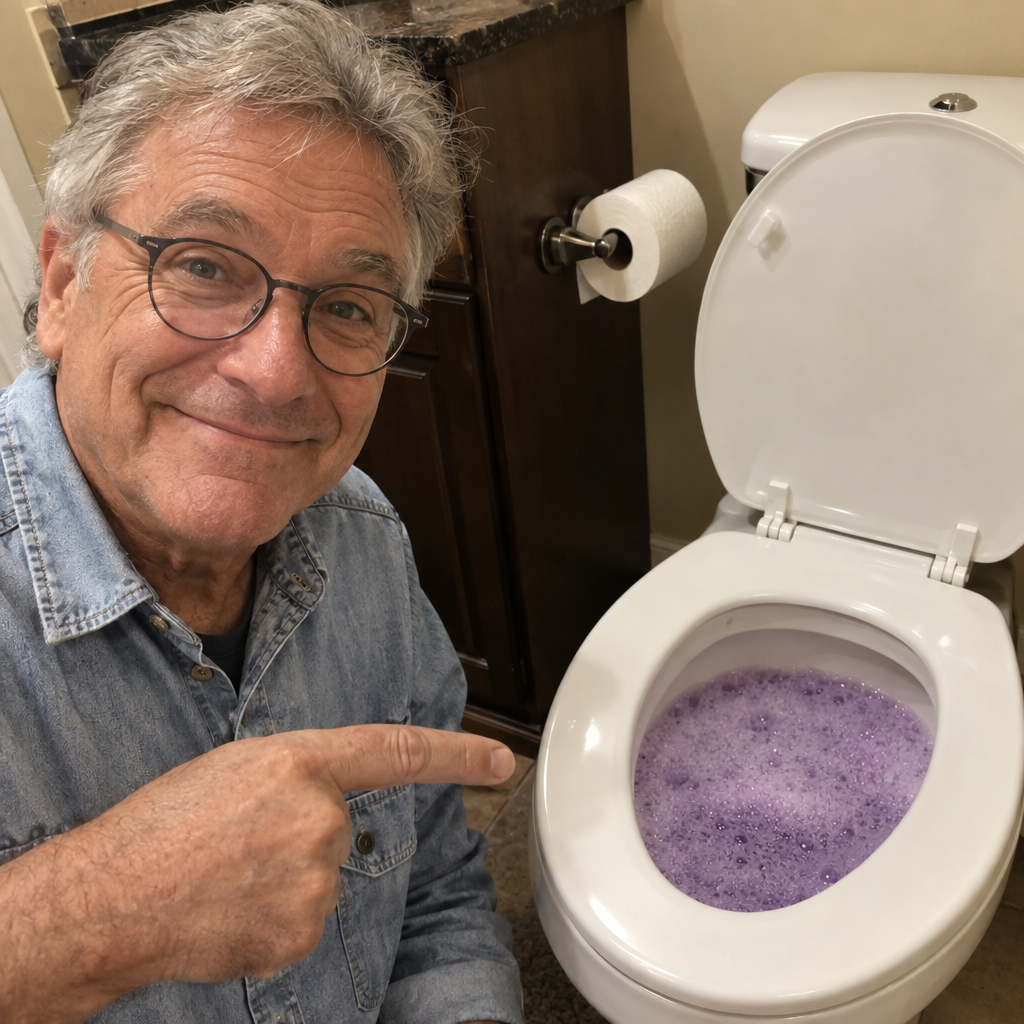
"Our city water is basically liquid chalk. The downstairs toilet had a ring so thick I was pricing replacements, and it needed two flushes every time. First bag, I stood there and watched — couldn't help myself. The foam went right up under the rim and just sat there. After the second week the ring was GONE and it clears in one flush. The toilet stays."
Gary T.
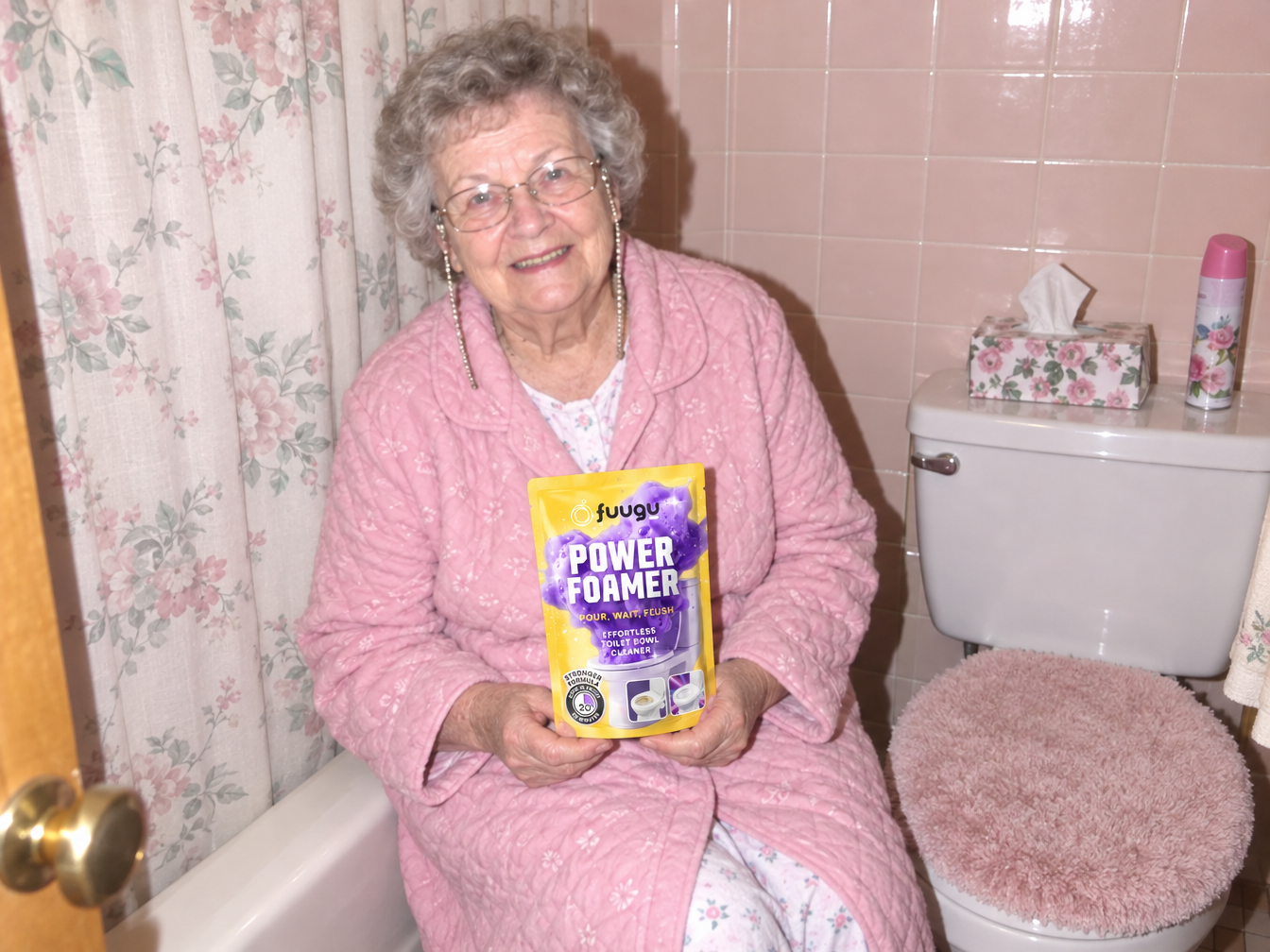
"I'm embarrassed to admit I used to sneak into the bathroom before company arrived just to check the bowl. My daughter's in-laws come every Thanksgiving, and I'd scrub that toilet twice the same morning. This year I dropped in a bag on Sunday like always and never gave it a second thought. No ring, no smell. I didn't realize how much that little worry weighed on me until it was GONE."
Marlene K.
"I'm the guy who always says 'just use vinegar.' Did that for a year — it fizzes at the bottom and does nothing for the rim. My wife bought this and I fully expected to tell her I was right. I wasn't. The orange stain under the rim from our well water was gone after three bags. Fine, I'll say it: it WORKS. Just don't tell her."
Dale R.
The Note Kowalski Now Writes on Every Invoice
These days, Kowalski ends most service calls the same way. On the back of the invoice he writes four words: "One bag, every Sunday."
His reasoning is simple. Scale is far easier to dissolve at a week old than at a year old, and a weekly bag never gives it the head start it needs.
Hard-water homes: White spots on your faucets mean your toilets are scaling fast. Weekly, no skipping.
The guest bathroom: Toilets that sit unused stain fastest. Don't save the bags for the one you use most.
Weak flushes: If you're double-flushing, start here — scale in the rim jets is the usual suspect.
Old, stubborn rings: Two weeks back to back, then settle into the weekly rhythm.
Each box holds two weekly bags, so a two-box pack covers one toilet for a full month — or two bathrooms for two weeks.
Now set that next to what Kowalski sees homeowners pay:
A weekend emergency callout: often $250–$450
A professional descaling of the trapway and jets: $150–$300 per toilet
A replacement toilet, installed: $500 and up
Twenty minutes on a Sunday, or one of those invoices. Kowalski knows which he'd choose — he's the one who writes them.
Before You Order: The Purple Powders That Don't Foam
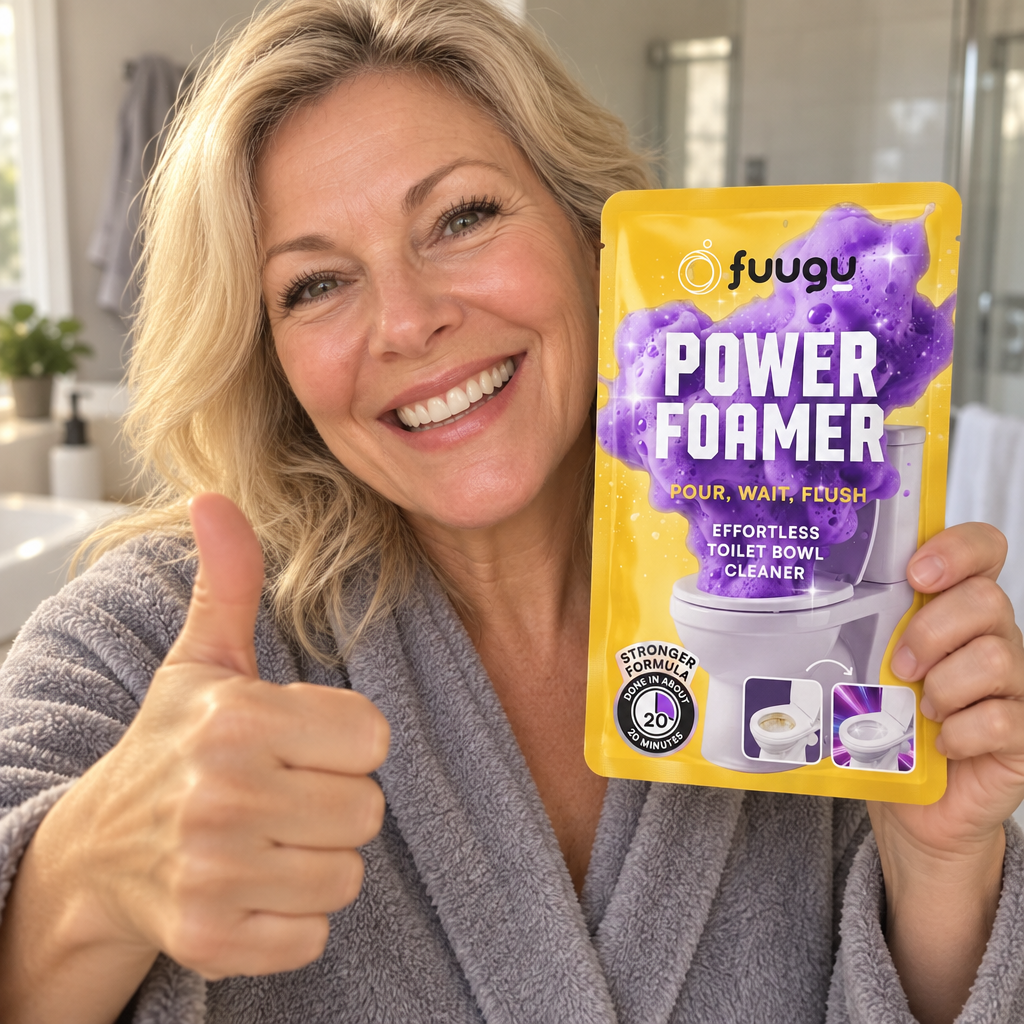
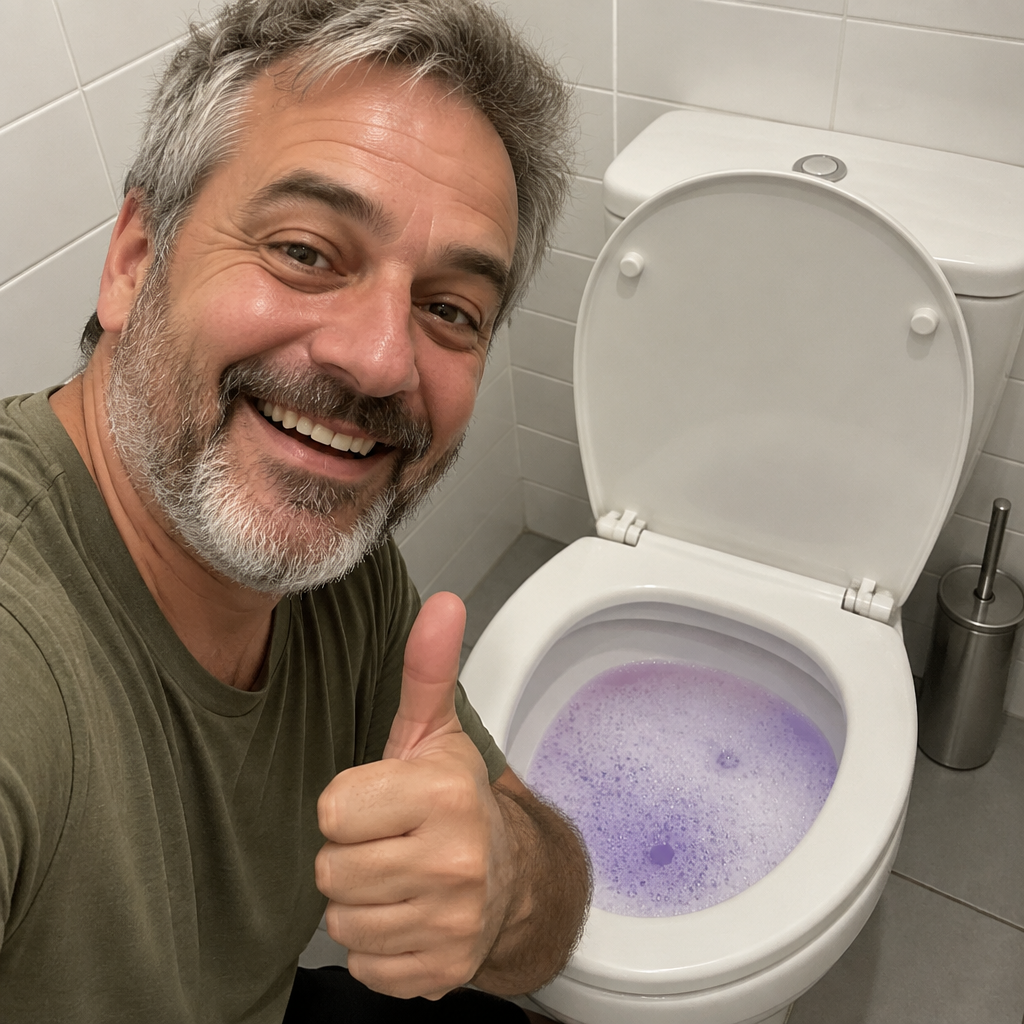
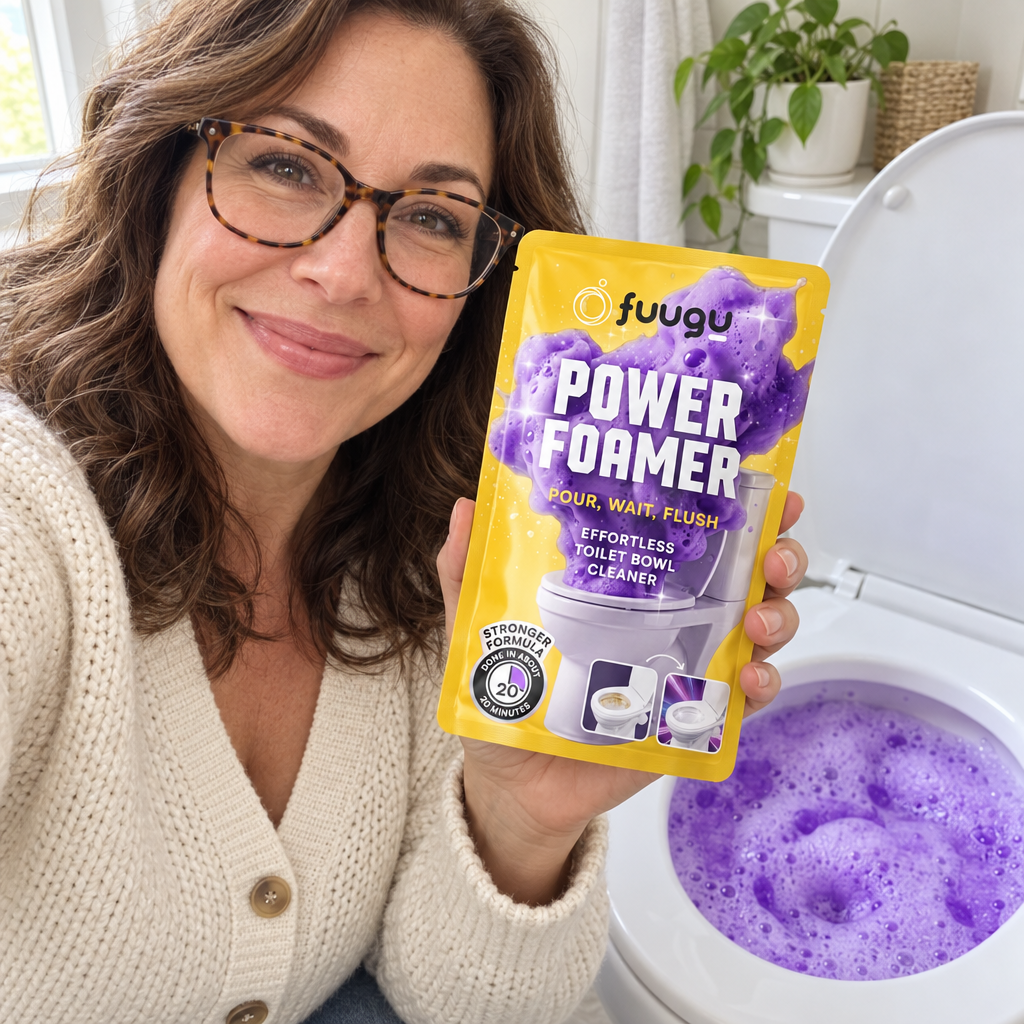
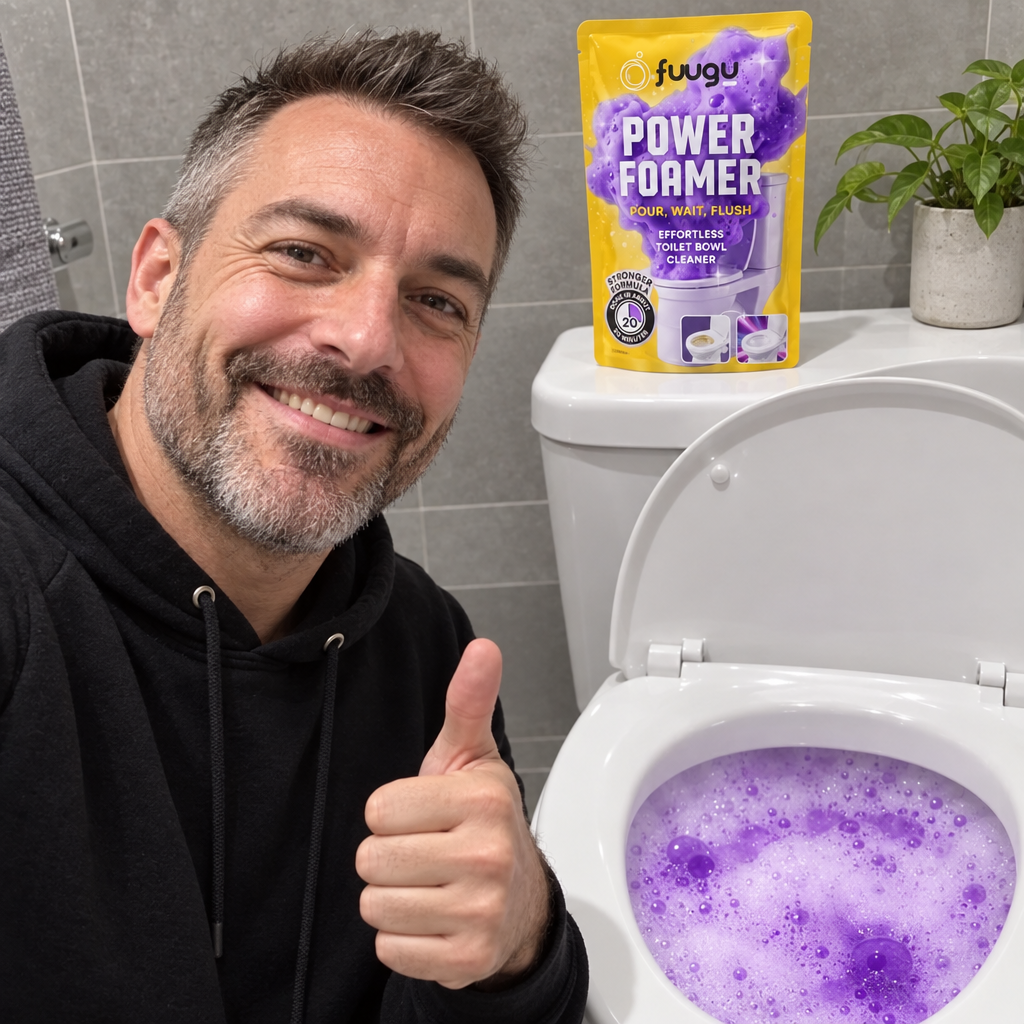
Kowalski has already had customers show him knock-offs: same colour, a similar bag, a fraction of the result.
The pattern never changes, he says. They fizz for a minute, go flat, and leave a purple puddle sitting at the bottom of the bowl. No hold means no contact time — and no contact time means nothing gets dissolved.
"The twenty minutes IS the product," he says. "Without it, you've bought food coloring."
The linked seller provides the Fuugu offer. Visit the seller's offer page to review pack prices and the advertised 60-Day Money-Back Guarantee. This independent advertising page does not sell products or process orders.
Before ordering, review the product details, seller information and current terms on the linked offer page.
LIMITED-TIME: Up to 70% Off When You Order Direct
The manufacturer is running a limited-time discount of up to 70% on its multi-box packs. The bigger the pack, the lower your cost per Sunday.
Your order is protected by a 60-Day Money-Back Guarantee. If it doesn't foam like the video, one click refunds your card — no forms, no photos, no store credit. And you're never signed up for a subscription unless you switch one on yourself.
Promotions like this tend to end without much notice. The next page shows whether the discount is still running.